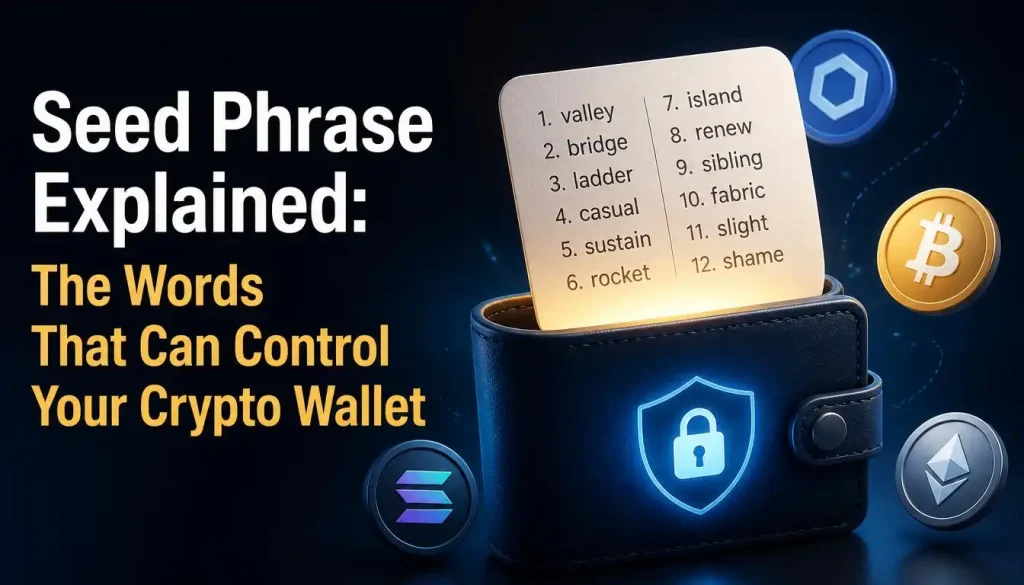
A seed phrase is not an ordinary password hint. In common deterministic wallets, its words encode recovery information from which keys can be derived. Someone obtaining that information may therefore gain access to assets under the relevant wallet arrangement.
A phrase can represent more than one account
A private key is associated with a particular signing authority. A recovery phrase can generate multiple accounts and keys. Exposure may therefore affect more than the single address currently displayed. Not every wallet uses the same recovery standard, so compatibility should not be assumed.
Losing a device differs from losing recovery material
If a phone disappears but the correct backup survives, compatible software or hardware may restore access. If both device and necessary backup are lost, a conventional self-custody setup generally has no central institution able to reset access. Multisignature or social-recovery designs follow their own arrangements.
A backup must be correct and usable
Word order and spelling matter. Where an additional passphrase is used, the words alone may not restore the intended wallet. A missing or incorrect passphrase can lead to a different wallet. Never test real recovery words by entering them into an arbitrary website; use the wallet’s trustworthy official verification process.
Address theft and destruction separately
Secrecy protects against unauthorised access; durability protects against fire, water or loss. Photographs and cloud backups connect the secret to the security of additional devices and accounts. Physical copies must also be protected from unauthorised readers. If inheritance or emergency access is needed, plan how it can work without casually distributing the secret.
Do not send recovery words to support agents. Deleting an exposed photograph or changing an app password does not invalidate a copy already obtained by someone else. Treat the phrase as control over the accounts it can recreate, not as a harmless list of words.
A Seed Phrase Is a Recovery Root, Not a Normal Password
A seed phrase is a human-readable representation of the secret material from which a compatible cryptocurrency wallet can derive many private keys. It is not simply a login password that a company can reset. If the words are lost and no other backup exists, access to the wallet can be permanently lost.
That difference is why seed phrases deserve a higher level of protection than ordinary website credentials. A password protects an account held by someone else; a seed phrase can recreate the cryptographic control itself.
Why Wallets Use Words Instead of Long Random Numbers
Cryptographic secrets are difficult for humans to copy accurately as long strings of binary or hexadecimal data. Standardized word lists make backup easier while preserving the underlying randomness. Many wallets use well-known standards that generate a sequence of words from random entropy plus error-detection information.
The words are not a memorable sentence chosen by the user. Their security comes from the randomness of the generated secret and from keeping the exact words and order private.
Twelve and Twenty-Four Words Are Common, but the Standard Matters
Many wallets use 12-word or 24-word recovery phrases. The number of words reflects how much underlying entropy and checksum information is encoded, but users should not assume that any random list of 12 or 24 words is compatible with every wallet.
Compatibility depends on the wallet standard, derivation paths, supported networks and sometimes additional settings. Before relying on a backup, understand how the specific wallet restores accounts.
Word Order Is Part of the Secret
A seed phrase is not just a bag of words. The order is essential. Writing all words correctly but swapping two positions can produce a completely different result or an invalid phrase.
Number each word clearly when creating a physical backup. Avoid ambiguous handwriting, abbreviations or spacing that could make future recovery uncertain.
Seed Phrase, Private Key and Wallet Address Are Different
A wallet address can be shared publicly to receive assets. A private key authorizes control over a specific account or derived address. A seed phrase can often regenerate many private keys and addresses inside the wallet.
Because the seed sits higher in this hierarchy, exposing it can compromise far more than exposing one public address. It should never be shared simply because someone needs to send you crypto.
A Hardware Wallet Does Not Make the Seed Unimportant
A hardware wallet can keep private keys isolated during daily use, but the recovery phrase remains the backup that can restore control if the device fails, is lost or is damaged. Anyone with the seed may not need the physical device at all.
This is why storing the device and the recovery phrase together can create a single point of failure. Theft, fire or another event could compromise both at once.
Screenshots and Cloud Backups Create New Attack Surfaces
Taking a screenshot of the seed or saving it in email, notes, cloud storage or a passwordless text file turns an offline secret into digital data that can be copied remotely. Phone backups and photo synchronization can replicate it to systems the user did not intend.
For high-value wallets, the usual security principle is to keep the seed offline and avoid typing it into internet-connected devices except when a legitimate recovery process absolutely requires it.
Fake Support Is One of the Most Common Seed-Phrase Traps
Scammers often claim that a wallet must be synchronized, verified, upgraded or rescued. They direct the user to a form that requests the recovery phrase. Once the phrase is submitted, the attacker can restore the wallet elsewhere and move the assets.
Legitimate support generally does not need the seed phrase. Treat any person or website asking for all recovery words as a critical warning sign.
The Seed Phrase Should Never Be Entered Because of an Unsolicited Message
Even if a message appears to come from a known wallet brand, do not follow the link and enter recovery words. Attackers can imitate logos, domains and support identities.
Navigate independently to official documentation and verify the recovery procedure. Urgency is a common social-engineering technique: claims that funds will be frozen in ten minutes are designed to prevent careful checking.
Physical Backups Have Their Own Risks
Paper is simple but can burn, fade, get wet or be thrown away. Metal backups can resist fire and water better, but they still need secure physical storage. A backup hidden so well that the owner cannot find it later is also a failed backup.
The best method depends on the value at risk and the household’s security environment. Durability, secrecy, accessibility and inheritance all need to be balanced.
A Passphrase Can Create an Additional Layer—and Additional Risk
Some wallet standards allow an optional passphrase on top of the recovery words. The same seed phrase combined with different passphrases can derive different wallets. This can improve security if used correctly because the seed alone may not be sufficient.
It also creates another way to lose access. If the passphrase is forgotten, there may be no recovery mechanism. Users should not add this feature without understanding exactly how their wallet implements it.
Test Recovery Before Depositing a Life-Changing Amount
A backup that has never been tested may contain a spelling mistake, wrong word order or incomplete instructions. A careful recovery test on an appropriate device can confirm that the backup recreates the expected wallet before a large balance depends on it.
The test itself must not expose the seed. Do not enter the words into random websites or unknown software. Follow the wallet manufacturer’s verified recovery process and check receiving addresses before moving significant assets.
Inheritance Planning Is Part of Seed Security
A perfectly protected seed can become inaccessible to a family if the owner dies or loses capacity without a recovery plan. The challenge is to give legitimate heirs enough information to recover later without exposing the secret while the owner is alive.
Possible structures include secure written instructions, professional custody, legal arrangements or multisignature systems. The right approach depends on the amount, technical skill and local law.
Splitting a Seed Informally Can Create False Security
Writing half the words in one place and half in another sounds safer, but it can increase the chance that one part is lost or copied incorrectly. It also may not provide the cryptographic protections users imagine.
If threshold recovery or multisignature is needed, use a well-understood standardized design rather than improvising a home-made scheme that has never been tested.
Changing a Seed Means Moving Assets, Not Editing Words
A recovery phrase cannot normally be ‘changed’ inside an existing deterministic wallet the way a password can. To move to a new seed, the user creates a new wallet with new secret material and transfers assets to addresses controlled by that new wallet.
This migration should be handled carefully: verify the new backup, send a small test amount, confirm receipt and only then transfer the remaining balance.
A Practical Seed-Phrase Security Checklist
Generate the wallet using trusted software or hardware. Record the exact words and order offline. Keep the phrase away from cameras, cloud storage and unsolicited support. Store the backup in a location protected from theft and physical damage. Understand whether a passphrase is used. Test recovery safely before relying on the setup and create an inheritance plan appropriate to the value.
The key principle is simple: whoever can reconstruct the seed can often reconstruct control. Convenience should never make the master recovery secret easy to copy.